

As industrial monitoring goes digital, reliability teams face a key decision: digital accelerometers or IEPE sensors with digital converters? This webinar breaks down both approaches, covering data integrity, frequency response, noise performance, and real integration, so you can confidently match the right technology to your application.
Delivering vibration data digitally unlocks seamless integration with control, enterprise, and cloud systems. In this webinar, Wilcoxon’s experts break down how Modbus, OPC UA, and MQTT transmit vibration waveforms, spectra, and metrics, helping you choose the right protocol to scale from targeted monitoring to advanced analytics across your organization.

A subtle change in vibration was the only early warning, but it was enough to make a major difference. By acting on advanced diagnostics and continuous condition monitoring, a fertilizer plant in France avoided unplanned downtime and saved 9,300 tons of production. This case study shows how early detection, paired with expert analysis, turns potential failure into operational advantage.

In any industrial facility, operators are the first line of defense against equipment failure. They are closest to the machines, see them every day, and often notice the earliest signs of trouble. This is the foundation of Operator-Driven Reliability (ODR)—a proactive approach that empowers operators to take ownership of equipment health and contribute directly to reliability outcomes.

As industrial monitoring shifts toward digital data, engineers are evaluating how best to integrate vibration data into control and analysis systems. Two leading approaches—digital accelerometers and rugged industrial IEPE accelerometers paired with digital adapters—offer distinct trade-offs in performance, reliability, and environmental suitability. Understanding these differences ensures you select the most reliable and suitable solution for your application.
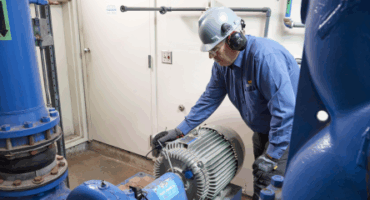
In condition monitoring and predictive maintenance, vibration analysis is one of the most effective techniques for detecting early signs of mechanical failure in rotating machinery. However, the accuracy and value of vibration data heavily depend on one critical factor: correct sensor positioning.
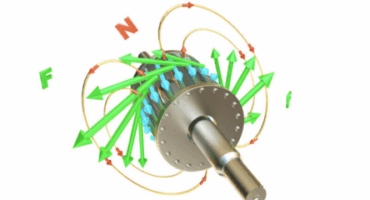
Whenever a magnetic object or ferrous object is subjected to a magnetic field, it reacts to the forces. This phenomenon is called magnetostriction.

Discover the key differences between digital vibration sensors and digital adapters - two powerful technologies driving smarter, data-driven maintenance. Learn how each plays a role in capturing rich vibration data, optimizing performance from the plant floor to the cloud.

Quick fixes may restore operations temporarily, but they rarely eliminate the real problem behind equipment failures. Root Cause Analysis (RCA) digs deeper to identify and correct the underlying issues, ensuring long-term reliability and preventing repeat breakdowns.