Introduction
Modern reliability programs have significantly reduced unexpected failures through advances in predictive maintenance technologies such as vibration analysis, thermography, slow-motion amplification, and oil analysis. These tools allow maintenance teams to detect developing faults earlier than ever, enabling planned intervention instead of reactive repair. However, a new challenge has emerged. While failures are now detected early, they frequently recur after repair. The same machines return to alarm conditions, often within similar operating intervals. This pattern suggests that although the damaged component was replaced, the underlying
conditions that caused the failure were never fully eliminated. This paper examines the distinction between identifying a fault and verifying machine health. It argues that reliability does not end at diagnosis or repair but requires confirmation that the machine is operating without continuous mechanical stress.
The Repeat Failure Problem in Predictive Maintenance
Predictive maintenance has proven highly effective at identifying faults such as bearing defects, gear wear, and imbalance before they escalate into catastrophic damage. Maintenance teams can intervene early, replace components, and return equipment to service with minimal disruption. Despite this success, many facilities continue to experience recurring failures on the same assets. When failures repeat with consistency, they are rarely random. Instead, they indicate a persistent condition that has not been addressed. Replacing a component restores function, but it does not guarantee that the operating environment has changed. If the forces acting on the machine remain unchanged, the failure mechanism will return. Research confirms that misalignment introduces abnormal force transmission, increasing vibration, stress, and wear across rotating systems [3].

Figure 1: Illustrates how detection, repair, and restart without verification create a cycle of recurring failures.
Figure 1 reinforces that predictive maintenance, while effective at identifying faults, can unintentionally create a cycle of repeated intervention when verification is absent. Each cycle restores operation, but without addressing the underlying condition, the same forces remain active. This creates a loop where symptoms are corrected, yet the root cause persists. Breaking this cycle requires shifting from reacting to failures toward confirming that the machine condition has fundamentally changed.
Repair Versus Restoration
Performing a repair returns a machine to operation. Performing a restoration returns it to proper operating condition. This distinction is fundamental to reliability. A repair addresses visible damage. Components are replaced, clearances are reset, and the machine
is returned to service. From an operational perspective, this is often considered success, as vibration decreases and performance appears improved. Restoration, however, requires that the machine operate without continuous internal stress. This means the geometric and mechanical relationships within the system must be correct, not just the components themselves. When a bearing fails, it is replaced and vibration levels typically decrease. This improvement can create a false sense of completion. If the root cause was continuous mechanical stress, such as misalignment, pipe strain, or base distortion, the replacement bearing is immediately subjected to the same conditions. Over time, the failure mechanism repeats. Research shows that even small levels of misalignment can significantly reduce bearing life by
increasing internal loading and accelerating fatigue. In some cases, bearing life can be reduced by up to 50 percent under certain operating conditions [2].
Baseline Integrity and Analyst Challenges
After maintenance, analysts rely on baseline data to evaluate machine condition and establish a reference point for future comparison. These baselines form the foundation for all trend analysis, helping determine whether a machine is stable, improving, or deteriorating over time. The accuracy of this baseline is critical, as every subsequent decision is influenced by how that initial condition is defined.
However, baselines often shift after overhaul, not because of true deterioration, but because the machine was not returned to a neutral mechanical state. Changes in geometry, assembly conditions, or residual stress can alter the machine’s operating behavior, creating a new starting point that does not represent a healthy condition. When baselines are established under stress, all future data reflects that condition rather than true machine health. Analysts may interpret rising vibration or changing patterns as new deterioration, when in reality they are observing the continuation of an unresolved issue. This can lead to repeated interventions, misinterpretation of data, and reduced confidence in the condition monitoring program.
Table 1. Repair vs Verified Restoration

The comparison highlights a critical reality. A repaired machine may appear to operate correctly, but without verification, its true condition remains unknown. Initial improvements can mask residual stress, leading to unstable baselines and recurring failures. Verified restoration establishes a known, stress-free condition, ensuring that future data reflects actual machine health rather than unresolved issues.
Mechanical Freedom and Continuous Stress
Rotating equipment is designed to operate along a true centerline where forces are evenly distributed, and components operate within design limits. When misalignment is introduced, that centerline is distorted, forcing shafts to deviate from their intended rotational path.
This results in cyclic bending during operation. Unlike transient forces, this condition exists continuously, affecting bearings, couplings, seals, and the machine structure. The machine may continue to operate, but it is no longer functioning within its intended mechanical conditions. Failures require time to develop, but stress does not. Continuous mechanical stress begins affecting components immediately, even if symptoms take time to appear. This is why machines often return to alarm conditions after repair, as the underlying stress was never removed. Research confirms that misalignment increases internal bearing loads and accelerates fatigue mechanisms [4], while also contributing to increased vibration and reduced system efficiency [5].

Figure 2: Illustration demonstrates how misalignment creates constant bending forces, creating mechanical stress.
Figure 2 shows how even small misalignment creates continuous bending forces during rotation, causing the machine to work against itself. This explains why replacing components alone does not prevent recurring failures. The focus must shift to ensuring the machine operates freely, making mechanical freedom the true objective of reliability.
Precision Measurement and Verification
The most significant advancement in alignment technology is not speed, but certainty. While faster measurement methods improve efficiency, they do not inherently improve reliability unless the results are accurate, repeatable, and trustworthy. Without confidence in the measurement, speed simply accelerates uncertainty rather than improving outcomes. Precision measurement introduces repeatability, allowing technicians to confirm results rather than assume them. This repeatability ensures that measurements reflect the true mechanical condition of the machine and can be consistently reproduced. As a result, alignment transitions from a subjective task into a controlled, data-driven process where results can be validated, compared, and documented with confidence. With this shift, alignment becomes a verification process rather than a corrective one. The objective is no longer limited to meeting a specified tolerance, but to confirm that mechanical stress has been removed and that the machine is operating under proper conditions. This distinction is critical, as it directly impacts long-term reliability rather than short-term performance. Studies confirm that proper alignment reduces vibration, improves load distribution, and enhances overall operational performance, reinforcing the importance of verification in maintenance
practices [6]. These benefits extend beyond immediate improvements, contributing to increased component life, reduced energy consumption, and more stable operating conditions over time.
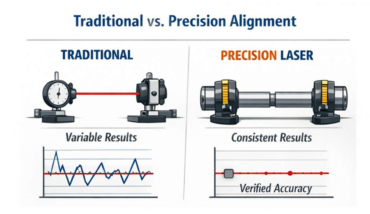
Figure 3: Precision measurement provides consistent and repeatable results compared to traditional methods.
Figure 3 highlights the difference between traditional alignment and precision measurement. Traditional methods may achieve acceptable results but lack confirmation of stability. Precision methods provide repeatable data, ensuring that corrections eliminate forcing conditions and that the machine operates as intended.
Transforming the Maintenance Workflow
Traditional maintenance workflows follow a sequence of detection, repair, restart, and monitoring. This approach is effective for addressing immediate issues and preventing catastrophic failure, but it primarily focuses on restoring operation rather than ensuring the machine has been returned to proper operating condition. As a result, it does not consistently deliver long-term reliability. An improved workflow introduces a critical step between repair and restart: verification. This step confirms that the machine is operating under correct mechanical conditions before it is returned to service and before a new baseline is established. By validating alignment and overall machine geometry, verification ensures that the root cause of the failure has been addressed rather than simply resetting the system.
When verification is applied, baselines become more stable and representative of true machine health. Alarm thresholds regain their meaning, as they reflect actual deterioration instead of residual conditions. Analyst confidence improves, and recurring failure patterns begin to decline, creating a more predictable and reliable monitoring environment. This shift transforms condition monitoring from a detection-focused activity into a prevention driven strategy. Instead of repeatedly identifying the same issues, the process begins to track true changes in machine condition, enabling maintenance teams to prevent failures rather than respond to them.

Figure 4: Adding verification transforms condition monitoring from detection to prevention.
Figure 4 illustrates how inserting verification into the workflow converts a reactive cycle into a controlled reliability process, ensuring machines are returned to service in a condition that supports long-term performance.
Conclusion
The persistence of repeat failures in modern reliability programs highlights a critical gap between diagnosis and verification. While predictive maintenance effectively identifies damage, it does not confirm that the conditions responsible for that damage have been eliminated. A repaired machine is not automatically a healthy machine. It is simply returned to service, often still exposed to the same forces that caused the original failure. Over time, those forces will produce the same result. Integrating verification into the maintenance workflow changes this outcome. It establishes a clear transition between repair and reliable operation, ensures baselines are built from a stress-free condition, and improves the accuracy and trustworthiness of condition monitoring data. More importantly, verification elevates condition monitoring from identifying problems to preventing them. It transforms maintenance from a reactive function into a controlled, measurable reliability strategy.
Finding a fault and replacing it closes a work order.
Verifying the operating condition of the asset improves the reliability problem.
References
[1] Mobius Institute, Machinery Condition Monitoring Fundamentals.
[2] Jesse, S., The Effects of Shaft Misalignment on Efficiency and Bearing Life, University of
Tennessee.
[3] Atmaji, F.T.D. et al., Experimental Investigation of Shaft Misalignment Effects, Mechanical
Systems and Signal Processing.
[4] Albdery, M.H. et al., Effect of Misalignment on Rolling Bearings, Engineering Journal.
[5] Zhang, X. et al., Effect of Misalignment on Bearing Performance, Journal of Vibroengineering.
[6] Utama, D.Y.S. et al., Effect of Shaft Alignment on Vibration and Power Consumption,
Mechanical Systems Research.