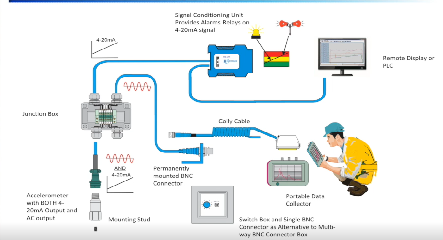
Join IMI Sensors for a focused, practical webinar that helps reliability and maintenance teams choose the right vibration sensor and install it correctly to get reliable condition‑monitoring data. We’ll compare quartz and ceramic sensing technologies, explain how to read and apply key specifications, review pros/cons for common applications, and dive into detection of rolling‑element bearing defects including why high‑frequency ranges matter for early fault identification. The session mixes concise theory with real‑world examples and mounting tips you can apply immediately.
Learning Objectives:
Understand the fundamental differences and performance benefits of quartz versus ceramic sensors and when to choose each.
Interpret critical sensor specifications (sensitivity, frequency range, temperature limits, impedance, mounting type) and translate them into purchase/installation decisions.
Learn mounting best practices (stud, magnet, adhesive, orientation, torque, cabling) to minimize installation errors and measurement variability.
Recognize vibration signatures of rolling‑element bearing faults and how frequency content—especially high‑frequency components—reveals early defects.
Select sensors and mounting approaches optimized for high‑frequency bearing fault detection and continuous monitoring/transmitter integration.
About the Presenter:
Mike Scott is an experienced reliability and maintenance professional focused on improving equipment performance, reducing unplanned downtime, and strengthening maintenance strategy. He brings a practical, operations-minded perspective to condition monitoring and reliability best practices, translating complex topics into clear, actionable guidance for teams in the field.
Webinar Registration - Sensor Selection and Mounting Best Practices
Please complete the form to continue. Your personal information is treated with care and will be handled in accordance with GDPR regulations.
Mike Scott is an experienced reliability and maintenance professional focused on improving equipment performance, reducing unplanned downtime, and strengthening maintenance strategy. He brings a practical, operations-minded perspective to condition monitoring and reliability best practices, translating complex topics into clear, actionable guidance for teams in the field.
By using this site you agree to our use of cookies. You are free to manage this via your browser setting at any time. To learn more about how we use the cookies please see our cookies policy.