About the Author

Serdar Gündoğdu
AI Practitioner, Enerjisa Üretim

Authors: Serdar Gündoğdu, Ahmet Çelik, Caner Türkalp, Doruk Temel

The remote-monitoring layer we built at the Tufanbeyli Thermal Power Plant caught failures no one expected — before they ever became failures — within its very first weeks. This is the story of that transformation and what it means for any plant operator.
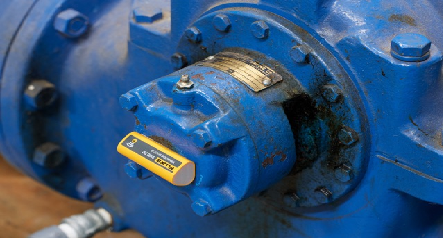
Picture a pump: its vibration is normal, its current is normal, it looks mechanically healthy. Yet its bearing keeps heating up — the temperature climbs slowly and reaches around 82°C. Nothing in the plant’s conventional alarm set saw this rise coming. Because the fault came not from where it was expected, but from a point no one was watching.

The bearing temperature rose while the running-hours counter stayed flat.
We caught this pump before it ever failed. And what caught it was not the screen in front of an operator, but an operations center kilometers away.
This is the story of the remote-monitoring layer we built at Enerjisa Üretim’s Tufanbeyli Thermal Power Plant — and what it surfaced in its first weeks.
What does a remote operations center do?
The Senkron Remote Operations Center (ROC) monitors Enerjisa Üretim’s fleet of plants — spanning different technologies: thermal, hydroelectric, wind, solar, and energy storage — remotely, from a single center. The ROC does not take over plant control; it sits between the plant’s control systems and the world of maintenance and reporting, and aims to do one thing very well: to see a problem before it turns into lost generation or an unplanned outage, and to alert the right team at the right time.
The value of this is the same for every plant operator: seeing early is far cheaper than seeing late.
The starting point: a plant with no systematic monitoring
When we began this work, Tufanbeyli was where many plants are today. Monitoring relied largely on on-site checks and point-by-point condition tracking; there was no remote layer evaluating the data centrally, systematically, and continuously. Problems were most often noticed only at the equipment itself.
Our first step was to rework the monitoring foundation on the plant’s existing data infrastructure and turn roughly 2,000 critical measurements across three units into a meaningful, trackable monitoring practice.
How it works: two complementary layers
The structure we built consists of two layers.

Two complementary monitoring layers.
A monthly statistical health screening. Every month, we test these critical parameters against their historical reference behavior. The question we ask is simple: “Has anything meaningfully changed this month compared with the past?” Each parameter is assigned a significance score, and the result goes straight to the field with “look at this” clarity. The strength of this layer is that it catches not only mechanical faults but also, for example, silent drifts in water and steam chemistry — risks that are easy to miss but costly in the long run.
A standards-based predictive alarm layer. The second layer adds an early-warning layer on top of the plant’s existing control systems: it raises a flag the moment a parameter begins to deviate from normal, before it enters a dangerous zone. We grounded this layer in international alarm-management and condition-monitoring standards (ISA-18.2, IEC 62682, EEMUA 191, ISO 17359/13374, ISO 20816) and VGB guidance, and kept it carefully separate from safety (trip) functions. On rotating equipment, the main signals we monitor are vibration, bearing and winding temperatures, oil temperature and pressure, motor current, and axial displacement. This layer is currently in active pilot on the plant’s flue-gas desulphurization (FGD) pumps.
What the first week revealed: the value of an independent layer
After the predictive-alarm pilot went live on the FGD pumps, within the very first week the bearing temperature on absorber recirculation pumps in two different units exceeded the early-warning threshold. The investigations led to an interesting and instructive common conclusion: on both pumps, the automatic lubrication work order had failed to trigger — but for different reasons. On one, the counter tracking the pump’s running hours had frozen; because the system did not “see” the equipment running, the lubrication order was never generated. On the other, the counter was working correctly, yet the work order still did not generate.
Two different silent faults, one physical symptom: an overheating bearing. And what caught both was not the counter or the work-order chain that the lubrication automation depends on — it was the independent layer watching the physics directly.
The lesson here goes beyond a single plant. Preventive-maintenance automation often depends on a single piece of data or a single chain. When that chain breaks silently — a counter freezes, a work order fails to generate — conventional alarms don’t see it, because there is not yet a threshold breach that counts as an “alarm,” only a slowly growing risk. An independent layer that watches the physics acts as a safety net exactly at this point.
There is a concrete payoff, too. Catching a bearing failure of this kind early avoided an unplanned outage as well as a repair on the order of €30,000–40,000 — chiefly a mechanical seal (about €15,000) and a gear reducer (about €25,000). The equipment returned to normal through planned, on-site intervention, without ever failing.
The benefit of monitoring is not limited to preventing failures, either. On a heavy slurry pump, we detected start-stop cycling repeating at short intervals. This was not yet a fault; but it was an operating regime that wears the equipment. The detection opened the door to an improvement such as moving to a load-sharing operating regime. Remote monitoring asks of a piece of equipment not only “is it running” but also “is it running correctly.”

After lubrication, the temperature returned to normal.
What does this mean for any plant?
There is nothing technology-specific about the approach we’ve described. The same logic works on a thermal unit, on a wind turbine, on a hydroelectric plant, and on a battery storage facility: evaluate the data centrally and continuously, catch deviations from normal early, and alert the right team in time.
At Senkron ROC, we are maturing this capability across our own multi-technology fleet; we are turning monitoring, predictive alarming, and fleet reliability into a single operational digital twin platform. Our goal is to carry this know-how not only across our own plants but also, as a scalable service, to other facilities that want to strengthen their monitoring infrastructure.
What we saw at Tufanbeyli is, in the end, proof of a simple idea: the best way to prevent a failure is to see it before it happens.
To learn more about the Senkron Remote Operations Center and our plant-monitoring approach, please get in touch with us.