
Five Minute Facts
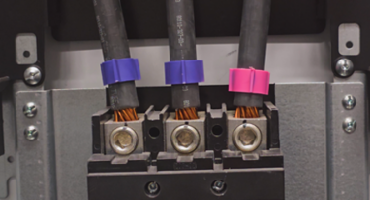
Leveraging Thermochromic Safe-Connect Solutions for Electrical Inspections
Thermochromic materials—substances that change color in response to temperature variations—offer a promising avenue for advancements in electrical inspections. Electrical systems, ranging from household wiring to complex industrial networks, require regular maintenance and inspection to ensure safety and functionality.
- Brad Nanna
- IRISS Inc.
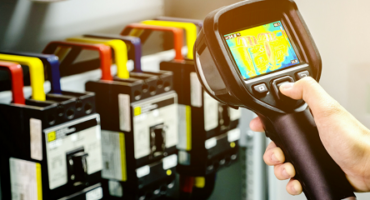
Use Infrared Thermography for Electrical Applications
Syed Munawer Hasan goes through examples of thermography’s success in detecting electrical anomalies, including a pump in a boiler house…
- Syed Munawer Hasan
- Plant Asset Efficiency Solutions
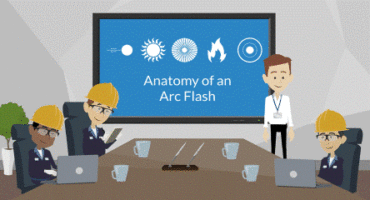
What is an Arc Flash & Arc Blast?
An Arc Flash is an energy discharge of light and heat that forms when a fault occurs in an electrical circuit. The arcing results in a tremendous amount of energy being released as current flowing through ionized air. An Arc Blast, separate from an Arc Flash, is a supersonic shockwave produced when the uncontrolled arc vaporizes the metal conductors.
- Martin Robinson
- IRISS Inc.
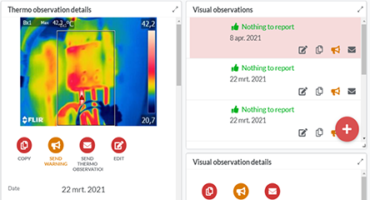
How Does the Infravision Application Work and How is a Thermographic Inspection Done?
Thermographic inspections offer many advantages as it helps to ensure a safe working environment and an increase in uptime. It also provides companies with accurate insights into the risks that undermine the continuity of their production lines (and the possibility to actively reduce these risks).
- Chris Kramer
- I-care
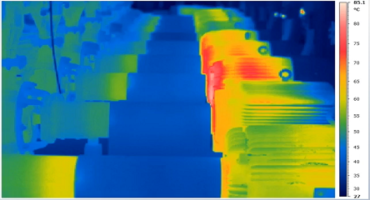
Mechanical Infrared Opportunities
While infrared is one of the most versatile of condition monitoring tools, we often fail to utilize it to its full potential. We know infrared is a key technology for all levels of electrical applications but when establishing condition monitoring programs, we may not realize what a great support technology it is for a variety of mechanical applications....
- Roy Huff
- The Snell Group
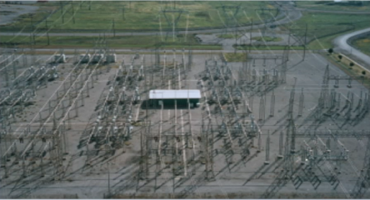
Procedures
The development of inspection guidelines or procedures are crucial to the success and sustainability of infrared programs. They can improve safety, consistency and support the continuity of your program. This brief tip will introduce the benefits of creating and utilizing infrared procedures. Also examples of the concept of generic and specific guidelines that can be used on different equipment categories will be shown.
- Roy Huff
- The Snell Group
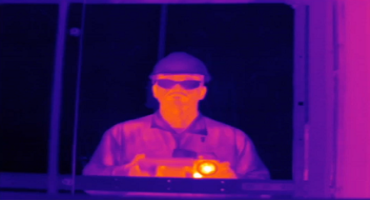
Is That a “Real Hot Spot” or Just a Reflection?
So much emphasis is placed on emissivity that in many cases reflectivity is not given the respect and attention it deserves. When capturing high-quality infrared data, reflected or background energy must be known, along with an understanding of how it is influencing the image and data.
- Roy Huff
- The Snell Group
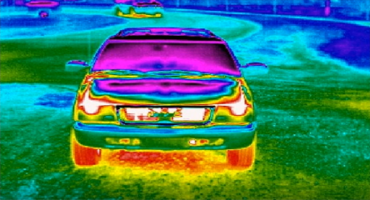
What’s the Best Color Palette?
What is the best color palette to use for your infrared camera and program? There are several factors to contemplate when selecting a palette for use in the field and additional considerations when selecting a palette for analysis and reporting. This tip will briefly describe some options to scrutinize when deciding what the best palette is for you.
- Roy Huff
- The Snell Group
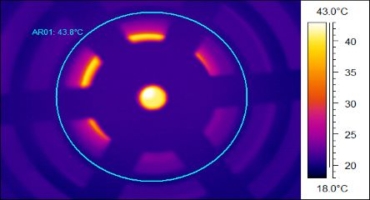
You Can See It, but Can You Measure It?
Just because you can see an anomaly does not mean you can radio-metrically measure it using an infrared camera. The concept of spatial and measurement resolution is one of several reasons and will be briefly described in this 5-minute fact...
- Roy Huff
- The Snell Group